
Technical
COP and SCOP of a heat pump: what they mean and why the 55 °C figure matters
COP is a snapshot at +7 °C; SCOP is the whole season. On radiators only the 55 °C figure counts: for an 8 kW demand, the gap to underfloor heating is 1,353 lei a year.
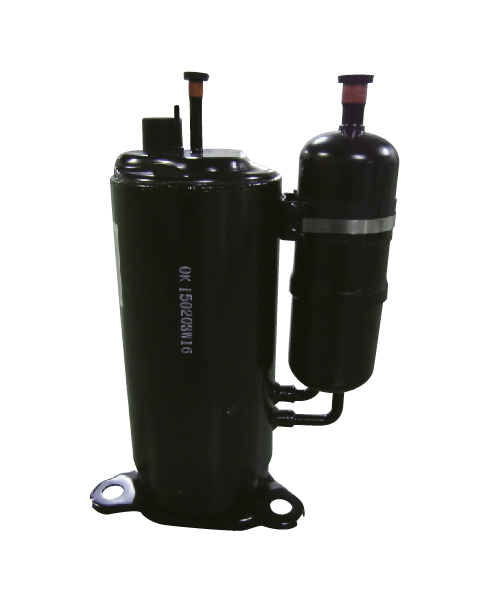
The COP of a heat pump tells you how many kilowatts of heat you get for one kilowatt of electricity, at a single moment and at a single pair of temperatures, usually +7 °C outside and 35 °C in the water. SCOP does the same sum over a whole season, following the EN 14825 standard, and it is the figure that goes on the energy label. For your bill, SCOP is what counts, and specifically the one at the water temperature your house uses: 35 °C with underfloor heating, 55 °C with radiators. Below are the figures from the data sheets of every Chofu model, those of other brands, and the sum that shows why the SCOP at 55 °C decides what you pay on radiators.
What COP means for a heat pump
COP stands for "coefficient of performance" and it is a ratio: heat delivered divided by electricity drawn, at the same moment. The Chofu R290 Premium 10 kW delivers 10.0 kW of heat and draws 2.02 kW from the socket at +7 °C outside and 35 °C flow, so COP 4.95. For one leu of electricity you get almost five lei of heat. Where the rest comes from is explained in how an air-to-water heat pump works: from the outside air, which holds heat even below zero.
The trouble with COP is that it changes with every degree. The colder it is outside and the hotter the water you ask for, the harder the compressor works for the same heat. That is why the data sheet has several COPs. The one at +7 °C and 35 °C, written A7/W35, is the standard catalogue point and the one printed large in brochures. The one at −7 °C tells you what happens in January.
| Model | COP A7/W35 | At −7 °C, 35 °C water | SCOP 35 °C | SCOP 55 °C |
|---|---|---|---|---|
| R290 Premium 4 kW | 4.60 | 4.0 kW, COP 2.60 | 4.48 | 3.31 |
| R290 Premium 6 kW | 4.88 | 6.0 kW, COP 2.86 | 4.46 | 3.43 |
| R290 Premium 10 kW | 4.95 | 10.0 kW, COP 2.44 | 4.68 | 3.61 |
| R290 Premium 10 kW three-phase | 4.72 | not published | not published | not published |
| R290 Standard 6 kW | 4.58 | 4.71 kW*, COP 2.70 | 4.5 | 3.3 |
| R290 Standard 8 kW | 4.71 | 6.16 kW*, COP 2.72 | 4.5 | 3.5 |
| R290 Standard 12 kW | 4.90 | 9.90 kW*, COP 3.00 | 4.7 | 3.6 |
| R290 Standard 12 kW three-phase | 4.67 | not published | not published | not published |
| R32 6 kW | 4.20 | 3.86 kW*, COP 2.60 | 4.7 | 3.2 |
| R32 10 kW | 4.39 | 6.88 kW*, COP 2.72 | 4.8 | 3.2 |
| R32 12 kW | 4.30 | 8.61 kW*, COP 2.64 | 4.7 | 3.2 |
| R32 16 kW | 4.30 | 11.37 kW*, COP 2.77 | 4.5 | 3.2 |
| R32 16 kW three-phase | 4.10 | not published | 4.1 | 3.2 |
Values marked with an asterisk come from the EN 14825 part-load test, not the unit's maximum output. For the Premium models Chofu publishes the maximum output at −7 °C, and it equals the figure in the name. Every model with a published SCOP has class A+++ at 35 °C and A++ at 55 °C on the European label. The three-phase R290 variants are not registered in EPREL, so we do not list figures we do not have.
Two things show in the table. COP drops by a third to a half between +7 °C and −7 °C, on every model and every brand. And at +7 °C the models are nearly equal, from 4.10 to 4.95; the ranking changes at −7 °C and at 55 °C.
What SCOP is and where the energy class comes from
SCOP, "seasonal coefficient of performance", is the efficiency over a heating season worked out under the European standard EN 14825. The standard takes a reference climate, the "average" one, with a design temperature of −10 °C, tests the pump at several part-load points, at −7, +2, +7 and +12 °C outside, then weights the results by the number of hours each temperature occurs. Standby consumption and the backup electric heater count too. The result is a single number, given separately for 35 °C and for 55 °C flow.
Regulations (EU) 811/2013 and 813/2013 take the SCOP and turn it into the seasonal energy efficiency on the label, expressed as a percentage: SCOP divided by 2.5, the primary energy coefficient for electricity, minus a few small corrections. For the Chofu R290 Premium 10 kW, 4.68 ÷ 2.5 gives 187% and 3.61 ÷ 2.5 gives 144%. That is where the classes come from: A+++ from 150% upwards, A++ between 125 and 150%. This is how the same unit ends up A+++ on underfloor heating and A++ on radiators, and how any label should be read: with the water temperature next to the class.
At Chofu, the SCOP of the R290 Premium 10 kW is certified Heat Pump KEYMARK (041-K128-03, tested by SGS). The other figures in the table are declared by the manufacturer and registered in EPREL.
Why a brochure "COP 6" says little at −15 °C
A COP of 6 in a brochure is, almost without exception, a COP at +7 °C outside and 35 °C flow, sometimes at an even milder temperature. No Chofu pump has 6 at A7/W35; the best, the Premium 10 kW, has 4.95. At 7 degrees outside the pump runs at a small fraction of its output anyway and uses little. The day that makes your bill is the one at −15 °C, the design temperature of climate zone II under SR 1907-1, which covers Oradea, Arad and Bucharest.
At −15 °C no data sheet, ours included, publishes a COP. We have the figure at −7 °C: 2.44 for the Premium 10 kW with 35 °C water, and at 55 °C the same Chofu model page states 1.93. At −15 °C it is below these, and the unit is guaranteed to run down to −20 °C outside. When you compare two quotes, ask for the COP at −7 °C and the SCOP at your flow temperature.
How SCOP becomes a bill: 8 kW at 35 °C versus 55 °C
On the sizing page, the yearly cost is worked out with the formula from the article on what a winter costs with a heat pump:
electricity per year (kWh) = heating output (kW) × 1977 equivalent hours ÷ SCOP; bill = kWh × lei/kWh
The 1977 hours come from Eurostat degree days for Romania and from the −15 °C of zone II. Take a house with a heating demand of 8 kW, hot water excluded: 8 × 1977 = 15,816 kWh of heat per year. On underfloor heating, at 35 °C, we use SCOP 4.68; on radiators, at 55 °C, 3.61.
| Installation | SCOP used | Electricity per year | At 1.11 lei/kWh | At 1.35 lei/kWh | At 1.69 lei/kWh |
|---|---|---|---|---|---|
| Underfloor, 35 °C | 4.68 | 3,379 kWh | 3,751 lei | 4,562 lei | 5,711 lei |
| Radiators, 55 °C | 3.61 | 4,381 kWh | 4,863 lei | 5,915 lei | 7,404 lei |
The difference is 1,002 kWh a year, or 1,353 lei at the usual tariff of 1.35 lei/kWh. The ratio 4.68 ÷ 3.61 gives 1.30: on radiators you pay 30% more electricity for the same heat. The tariffs are those in the calculator, VAT included: 1.11 lei/kWh (Hidroelectrica Viitor Hidro, Muntenia, 01.07–30.09.2026), 1.35 lei/kWh (PPC Fix Online, September 2026) and 1.69 lei/kWh (PPC Simplu Online, 12 months). The method is an upper bound: it does not subtract sun through the windows or heat from inside the house.
Hence our rule: on underfloor heating you look at the SCOP at 35 °C, on radiators only at the one at 55 °C. If you have old radiators and want to see whether 55 °C water is enough for them, the room-by-room check is in the article on heat pumps on old radiators. If you have underfloor heating, that case is described in the article on heat pumps with underfloor heating.
SCOP at 55 °C: Chofu against other brands
In the configurator's cost comparison we keep only pumps that publish SCOP at both temperatures, so they can be compared. The figures below are from the manufacturers' sheets, checked on 17.09.2026, and the bill is worked out for the same 8 kW demand on radiators, at 1.35 lei/kWh. The only figure tested by a third-party laboratory is Chofu's.
| Heat pump | SCOP 35 °C | SCOP 55 °C | Electricity per year at 55 °C | Bill per year |
|---|---|---|---|---|
| Chofu R290 Premium 10 kW (KEYMARK) | 4.68 | 3.61 | 4,381 kWh | 5,915 lei |
| NIBE S2125-8 (R290) | 5.00 | 3.70 | 4,275 kWh | 5,771 lei |
| Daikin Altherma 3 M, 8 kW (R32) | 4.61 | 3.35 | 4,721 kWh | 6,374 lei |
| Panasonic Aquarea L, 9 kW (R290) | 4.31 | 3.33 | 4,750 kWh | 6,412 lei |
| Bosch Compress 3400i AWS (R32, split) | 4.72 | 3.20 | 4,942 kWh | 6,672 lei |
| iDM AERO SLM (R410A, split) | not published | not published | cannot be worked out | cannot be worked out |
NIBE has a higher SCOP than Chofu at both temperatures, and we write it as it is. Bosch has a better SCOP than Chofu at 35 °C but the weakest in the table at 55 °C: on underfloor heating it would cost 38 lei a year less, on radiators 757 lei more. The order at 35 °C is not the order at 55 °C, and on radiators the gap between 3.61 and 3.20 shows on the bill every year. Chofu's R32 models all have 3.2 at 55 °C; the difference between refrigerants is in the article on R290 or R32.
What lowers the real SCOP in your house
The SCOP on the sheet is measured in a laboratory. In the house you can lose it easily, and usually not because of the pump.
Flow temperature comes first. Every extra degree lowers efficiency, and a pump set to 60 °C "to be safe" works all year at 55 °C or worse, including on mild days when the radiators would be happy with much cooler water. The heating curve, cooler water when it is warmer outside, is what makes the difference between the SCOP on paper and the one on the meter.
Second is oversizing. A 16 kW pump in a house that needs 8 starts and stops often, and every start costs electricity without giving heat. The configurator warns you when the pump exceeds 1.35 times the demand; how the demand is worked out is in the article how to choose a heat pump.
Third is the hydraulics. Too little flow, air in the system, a missing buffer where thermostatic valves close one after another, all make the compressor cycle. And the hot water tank: if hot water is set to 60 °C, the pump works part of the year at its weakest COP just for showers. A tank with an enlarged coil and a lower set temperature keep hot water consumption within limits.
Frequently asked questions
What does COP mean for a heat pump?
The ratio between heat delivered and electricity drawn, at the same moment and at a specific pair of temperatures. COP 4.95 at A7/W35 means 4.95 kW of heat for 1 kW of electricity, at +7 °C outside and 35 °C in the water. At −7 °C the same unit has COP 2.44.
What SCOP does a good heat pump have?
On the sheets in the table, the Chofu models with a published SCOP have between 4.1 and 4.8 at 35 °C and between 3.2 and 3.61 at 55 °C. On the European label the class is given on the seasonal efficiency, that is SCOP ÷ 2.5 minus corrections: A+++ from 150% upwards, A++ between 125 and 150%. Look at the figure for your water temperature, not the highest one on the sheet.
Are there heat pumps with COP 6?
At +7 °C outside and 35 °C water or cooler, some sheets show 5 or 6. No Chofu pump has 6 at A7/W35; the best model has 4.95. The figure that says something about January is the COP at −7 °C, and that is between 2.4 and 3.0 on every model in the table.
How much electricity does a heat pump use per day?
It depends on the day. The Chofu Premium 10 kW draws 2.02 kW per running hour at +7 °C and around 4.1 kW at −7 °C with 35 °C water, and it does not run at full output every hour. Per year, for an 8 kW demand in zone II, it comes to 3,379 kWh on underfloor heating and 4,381 kWh on radiators.
What is the efficiency of an air-to-water heat pump on radiators?
The one at 55 °C: 3.61 for the Chofu R290 Premium 10 kW, 3.5 and 3.6 for the R290 Standard 8 and 12 kW, 3.2 for the R32 models. On radiators the configurator keeps only the R290 models, which heat water to 75 °C.
See which SCOP fits your house
Enter the floor area, insulation and what you have in the rooms into the configurator. You get the output, the model and the yearly bill worked out with the SCOP for your temperature. The full sheets are on the heat pumps page, and for a quote with installation you send us the details of the house.
Next step
Find the heat pump that fits
Same questions, two minutes, no contact details.
Next steps
If you're clear on the output
Your next step depends on where you've got to: the figure for your house, the models that cover it, or who does the installation.
- Work out your house's heat demand Same questions, two minutes, no contact details.
- See the Chofu models From 4 to 16 kW, with the output and coverage for each.
- Who does the installation Certified Chofu partner installers, vetted by NEDAVI. You choose who does the job.